


Do you wake up feeling exhausted even after a full night's sleep? Do everyday activities leave you physically and mentally drained? Perhaps you experience persistent fatigue alongside headaches, neck stiffness, muscle pain, or difficulty concentrating.
These symptoms may be associated with chronic fatigue syndrome, medically known as myalgic encephalomyelitis/chronic fatigue syndrome (ME/CFS).
By downloading the Digital Patient Chart mobile app you can better control your patient portal.


ME/CFS is a complex, long-term illness that affects multiple systems throughout the body. Although its exact cause remains unknown, researchers continue investigating the roles of the nervous system, immune function, and other biological processes.
Because the upper cervical spine contributes to head movement and sensory signaling, some people wonder whether neck problems could influence their symptoms.
Understanding this relationship can help clarify where upper cervical chiropractic care may fit within a comprehensive approach to managing musculoskeletal discomfort.
What Is Chronic Fatigue Syndrome?
Chronic fatigue syndrome is a serious condition characterized by profound fatigue that does not substantially improve with rest.
Unlike ordinary tiredness, ME/CFS can significantly interfere with work, exercise, social activities, and everyday responsibilities.
Common symptoms include:
- Persistent and debilitating fatigue
- Unrefreshing sleep
- Difficulty concentrating or remembering information
- Muscle and joint discomfort
- Recurring headaches
- Dizziness or lightheadedness
- Sensitivity to physical or mental exertion
- Worsening symptoms following activity
One of the defining characteristics of ME/CFS is post-exertional malaise (PEM).
PEM occurs when physical, mental, or emotional exertion causes symptoms to worsen, sometimes for days or longer.
Because symptoms vary considerably, an individualized medical evaluation is essential.
What Causes Chronic Fatigue Syndrome?
Researchers have not identified one definitive cause of ME/CFS.
Some cases develop after infections, while other potential contributing factors remain under investigation.
Research focuses on several biological systems, including:
- Immune system activity: Researchers are investigating altered immune responses and inflammatory processes.
- Autonomic nervous system function: Some people with ME/CFS experience difficulties regulating heart rate and blood pressure, particularly when standing.
- Energy metabolism: Studies are examining differences in how the body produces and uses energy.
- Sleep regulation: Many individuals experience unrefreshing sleep even after spending sufficient time in bed.
- Neurological processes: Researchers are investigating changes involving sensory processing, cognition, and nervous system regulation.
ME/CFS is not simply caused by poor posture, muscle tension, or a lack of physical fitness.
Similarly, no established evidence identifies cervical vertebral misalignment as a primary cause of the illness.

How Is the Upper Cervical Spine Connected to the Nervous System?
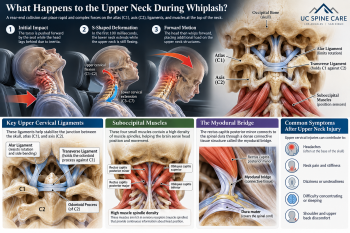
The upper cervical spine primarily consists of the atlas (C1) and axis (C2), the first two vertebrae beneath the skull.
These structures support the head and contribute to neck movement.
They are located near the junction between the brainstem and spinal cord.
The brainstem helps regulate essential physiological functions, while sensory receptors in the cervical muscles and joints provide information about head position and movement.
This sensory information contributes to coordination and postural control.
When cervical muscles become painful or joints lose comfortable mobility, the surrounding musculoskeletal system may respond with tension or altered movement patterns.
However, the anatomical relationship between the upper cervical spine and the nervous system does not establish that chiropractic adjustments can correct the underlying biological mechanisms of ME/CFS.
Can Neck Problems Make Chronic Fatigue Symptoms Worse?
People living with ME/CFS frequently experience pain, sleep disturbances, and reduced tolerance for everyday activities.
When neck discomfort occurs alongside these symptoms, it may add to the overall burden.
1. Persistent Neck Pain
Cervical discomfort can make sitting, working, or resting difficult.
Recurring neck pain may increase physical discomfort during activities that are already challenging for someone experiencing severe fatigue.
2. Muscle Tension and Headaches
Some people experience cervical muscle tightness and headaches alongside their chronic fatigue symptoms.
When these problems have a musculoskeletal component, appropriate conservative treatment may help improve comfort.
3. Disrupted Sleep
Neck stiffness and pain can interfere with finding a comfortable sleeping position.
Although reducing musculoskeletal discomfort may make rest more comfortable, it does not necessarily resolve the unrefreshing sleep associated with ME/CFS.
4. Reduced Physical Comfort
Persistent pain may make everyday movements more demanding.
Addressing separate musculoskeletal problems can be useful, even when the underlying chronic illness remains unchanged.
What Is Upper Cervical Chiropractic Care?

Upper cervical chiropractic is a specialized approach focusing on the structure and mechanics of the uppermost cervical vertebrae.
Unlike general chiropractic approaches that may involve multiple regions of the spine, upper cervical care concentrates primarily on the atlas and axis.
The evaluation may include:
- Reviewing medical history and symptoms
- Assessing neck mobility
- Evaluating relevant postural findings
- Examining cervical muscle tension
- Identifying possible mechanical restrictions
- Determining whether targeted chiropractic care is appropriate
Some upper cervical techniques use carefully directed adjustments without conventional forceful neck twisting.
The purpose is to address selected cervical musculoskeletal concerns.
Upper cervical treatment should not be presented as a method of directly restoring energy production or curing chronic fatigue syndrome.
Can Upper Cervical Chiropractic Help Chronic Fatigue Syndrome?
Upper cervical chiropractic has not been established as an effective treatment for ME/CFS itself.
However, some patients with chronic fatigue syndrome also experience neck pain, stiffness, or headaches that warrant separate evaluation.
When clinically appropriate, conservative cervical care may focus on:
- Reducing associated neck discomfort
- Improving comfortable cervical movement
- Addressing localized muscular tension
- Supporting everyday physical comfort
- Managing certain coexisting musculoskeletal complaints
Research suggests that selected forms of cervical manual therapy may benefit some people with mechanical neck pain.
However, these findings cannot be assumed to apply to ME/CFS.
There is currently insufficient high-quality clinical evidence demonstrating that upper cervical adjustments reliably reduce ME/CFS-related fatigue, normalize autonomic nervous system function, or treat the underlying illness.
Any chiropractic treatment should be individualized, with careful attention to symptom tolerance and potential risks.
Why Is Individualized Care Important for People With ME/CFS?
People with ME/CFS may respond differently to physical activity and clinical interventions.
Because post-exertional malaise can follow even modest exertion, treatment should never assume that progressively increasing activity is appropriate for everyone.
Before considering chiropractic care, patients should discuss their condition, medical history, symptoms, and functional limitations with a qualified healthcare professional.

A conservative treatment plan should prioritize comfort, safety, and monitoring for symptom worsening.
Chiropractic care, when appropriate, should complement rather than replace established medical management.
What Else Helps Manage Chronic Fatigue Syndrome?
There is currently no cure for ME/CFS, but symptom-focused management may help improve daily functioning and reduce the risk of worsening symptoms.
Important approaches include:
- Energy management and pacing: Balancing activity and rest to reduce post-exertional malaise.
- Sleep management: Identifying treatable sleep conditions and addressing sleep-related symptoms.
- Pain management: Developing individualized approaches to muscle, joint, and headache discomfort.
- Orthostatic symptom management: Evaluating dizziness, lightheadedness, or rapid heart rate when upright.
- Coordinated medical care: Working with healthcare professionals familiar with ME/CFS.
Fixed-increment graded exercise programs are not recommended for ME/CFS because they can aggravate symptoms.
Frequently Asked Questions About Chronic Fatigue Syndrome
Can upper cervical misalignment cause chronic fatigue syndrome?
Current research does not establish atlas or axis misalignment as a cause of ME/CFS.
Can upper cervical chiropractic reduce fatigue?
Upper cervical chiropractic has not been proven to treat the characteristic fatigue of ME/CFS. Some patients may consider treatment for separate musculoskeletal symptoms, such as neck pain.
Does the nervous system play a role in chronic fatigue syndrome?
Yes. Research suggests that neurological and autonomic nervous system abnormalities may contribute to ME/CFS symptoms. However, these findings do not establish that cervical adjustments correct these abnormalities.
Can chronic neck pain contribute to fatigue?
Persistent pain may interfere with sleep, concentration, and everyday activity, potentially increasing the overall burden of fatigue.
Is upper cervical chiropractic safe for people with ME/CFS?
Suitability depends on individual health circumstances. Patients should discuss potential benefits and risks with their healthcare team, especially when they experience post-exertional malaise or significant sensitivity to physical interventions.
Understanding Your Options for Upper Cervical Care
Living with chronic fatigue syndrome can make even simple daily activities difficult.
When ME/CFS occurs alongside neck pain, stiffness, or recurring musculoskeletal discomfort, identifying and appropriately managing these additional symptoms may support greater everyday comfort.
Upper cervical chiropractic offers a specialized approach to evaluating cervical spine mechanics and determining whether selected musculoskeletal concerns may benefit from conservative treatment.
Although it is not an established treatment for ME/CFS, an individualized upper cervical evaluation may help determine whether accompanying neck-related symptoms warrant attention.
Interested in learning more about upper cervical chiropractic care?
Visit https://ucspinecare.com to explore the approach and request a consultation.
Medical disclaimer: This article is intended for educational purposes and does not replace professional medical diagnosis or treatment. Upper cervical chiropractic has not been established as a treatment or cure for ME/CFS.
References
CDC — About ME/CFS — Overview of the illness, symptoms, and diagnostic considerations.
CDC — Managing ME/CFS — Guidance on symptom management and post-exertional malaise.


Leave a comment