

The upper cervical spine is one of the most specialized regions in the body. It includes the atlas and axis, the top two vertebrae that support the head, allow a large percentage of neck rotation, and sit close to important neurological and ligamentous structures.
Because this area is anatomically unique, upper cervical chiropractors often place a strong emphasis on precise evaluation before beginning care. In many practices, that evaluation includes CBCT imaging and detailed structural analysis.
By downloading the Digital Patient Chart mobile app you can better control your patient portal.


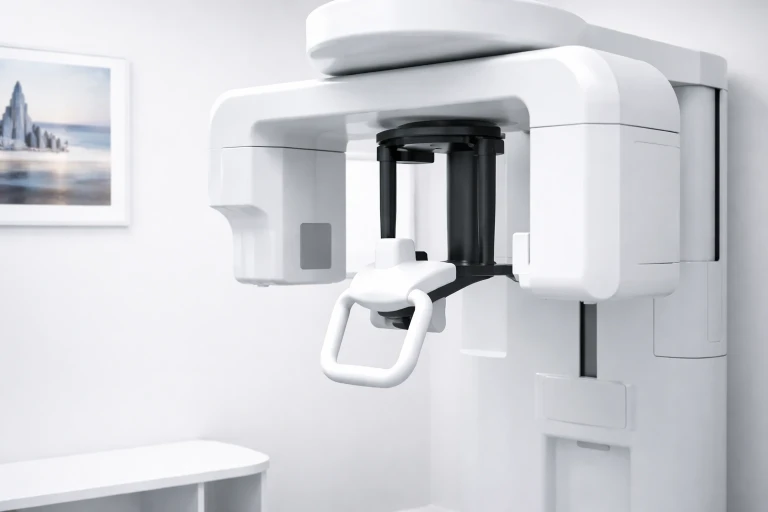
CBCT, or cone beam computed tomography, is different from standard X-rays and different from conventional medical CT. It produces a three-dimensional image using a cone-shaped X-ray beam that rotates around the patient, allowing providers to visualize bony structures in much more detail than plain radiographs.
In upper cervical practice, this can be especially relevant when assessing the cranio-cervical region, where small anatomical differences, joint relationships, degenerative changes, or structural asymmetries may influence clinical decisions.
Why the Upper Cervical Region Requires Precision
The upper cervical spine is not built like the rest of the neck. The atlas and axis are designed for mobility, especially rotation and nodding, but they also rely on strong ligament support and precise joint mechanics.
This area is closely related to the craniocervical junction, where the skull and cervical spine meet. Because of that, careful evaluation matters when a patient presents with neck pain, headaches, postural strain, trauma history, or complex mechanical complaints.
Upper cervical chiropractic often emphasizes specificity. That means the doctor is not simply asking whether the neck hurts. The real question is whether there is a structural issue, mobility restriction, asymmetry, degenerative change, or contraindication that should affect how care is delivered. This is where imaging and analysis may contribute.
What CBCT Adds to Upper Cervical Chiropractic
Traditional radiographs provide a two-dimensional image. CBCT provides a 3D view of the region. That added detail can improve visualization of bony anatomy and the craniocervical junction compared with radiography. Research comparing radiography and CBCT for this region found superior visualization of incidental and abnormal craniocervical findings with CBCT.
In practical terms, CBCT may help a provider examine:

- the spatial relationship of the upper cervical vertebrae
- visible degenerative changes
- joint anatomy and asymmetry
- congenital or anatomical variations
- structural findings that may influence technique choice or treatment planning
That does not mean CBCT explains every symptom by itself. Imaging is one part of the clinical picture. The image becomes useful when it is interpreted alongside the patient’s history, examination, posture, motion findings, and overall presentation.
Appropriate imaging guidance consistently supports this approach: imaging should assist decision-making, not replace sound clinical reasoning. (acr.org)
Imaging Is Not Just About Seeing More. It Is About Making Better Decisions.
One of the most important roles of CBCT in upper cervical chiropractic is not just precision. It is clinical judgment and safety.
Before any manual procedure is delivered, a chiropractor should consider whether there are structural concerns that could change the treatment plan. In some patients, imaging may help identify fracture, severe degeneration, anatomical anomalies, or signs that more medical workup is needed. In other patients, imaging may support a more individualized corrective approach by clarifying the local anatomy.
This is an important distinction. Good imaging is not about creating dramatic findings. It is about helping the provider answer practical questions:
Is care appropriate here?
Does the technique need modification?
Is referral needed first?
Would another imaging method be more useful?
That kind of analysis protects the patient and improves the quality of decision-making.
In upper cervical practice, CBCT is often favored when the goal is structural analysis of bone and joint relationships, while MRI may be more appropriate if the concern is neurological compression, soft tissue injury, or ligamentous damage.
Why Analysis Matters as Much as the Scan

A CBCT scan alone is not the treatment. It is a tool. Its value comes from how the information is analyzed.
Upper cervical analysis may involve reviewing the position of the upper cervical vertebrae, measuring relationships between structures, assessing symmetry, identifying visible degenerative changes, and correlating those findings with the patient’s symptoms and exam results. The goal is to make care more individualized rather than generic.
This matters because imaging findings do not always equal symptoms. Some people have visible structural changes with little pain.
Others have significant symptoms with relatively modest imaging findings. Responsible providers avoid overpromising based on an image alone. Instead, they use the scan as one part of a broader evaluation. That kind of restraint is part of evidence-informed care.
What About Radiation Exposure?
Because CBCT uses ionizing radiation, this question matters.
CBCT is often discussed as a lower-dose alternative to conventional medical CT for certain head and neck applications, but the actual dose varies depending on machine type, field of view, and exposure settings.
One recent comparison found the radiation dose from CBCT lower than medical CT on average, while a craniocervical junction study found CBCT protocols could be equal to or lower than radiography in similar imaging scenarios. Even so, CBCT still requires justification and should not be treated as routine screening just because it is available.
So the better message for patients is this:
CBCT can be valuable, but it should be used because it helps answer a clinical question, not because every patient automatically needs it.
When CBCT May Be Most Helpful
CBCT may be especially helpful in upper cervical chiropractic when the provider wants a more detailed 3D view of the area before beginning a specific corrective approach, or when there is a need to better understand anatomy, structural asymmetry, degeneration, prior trauma-related changes, or other visible osseous findings.

At the same time, routine imaging for every neck complaint is not universally recommended in broader spine-care guidelines. Imaging is most defensible when it is expected to affect treatment planning, improve safety, or help clarify a case that is not straightforward.
That balanced approach is important for both patients and providers. It allows imaging to be used thoughtfully rather than automatically.
What Patients Should Know
If a patient is considering upper cervical chiropractic, it is reasonable to ask how imaging is used in that office. A useful answer should explain:
- why CBCT is being recommended
- what the scan is expected to show
- how the findings will affect care
- whether other imaging options would be more appropriate in some cases
- how the provider balances precision with radiation awareness
The most trustworthy practices do not present imaging as a sales step. They present it as part of careful assessment and individualized planning.
Final Thoughts
CBCT has become an important imaging tool in many upper cervical chiropractic practices because it offers 3D visualization of the upper cervical and cranio-cervical region, often with greater structural detail than plain radiographs and, in some contexts, lower radiation than conventional medical CT.
When combined with thoughtful analysis, it can help providers better understand anatomy, improve planning, and support safer decision-making. (pmc.ncbi.nlm.nih.gov; pmc.ncbi.nlm.nih.gov)
Its real value, however, is not in the scan alone. It is in how the scan is used. In upper cervical chiropractic, the best role of CBCT is to support a more precise, individualized, and clinically responsible approach to care.
Quick Answers
What is CBCT in upper cervical chiropractic?
CBCT stands for cone beam computed tomography. It creates a 3D image of the upper cervical and cranio-cervical region and is often used to evaluate bony anatomy in more detail than standard X-rays.
Why do upper cervical chiropractors use CBCT?
They may use it to better visualize upper cervical anatomy, assess structural relationships, improve treatment planning, and rule out findings that could affect safety or technique selection.



Leave a comment